










I’m so tired of seeing those glossy, Pinterest-perfect infographics claiming that the secret to financial literacy is buying your toddler a $50 wooden Montessori cash register. Honestly, it’s a joke. You don’t need expensive “educational tools” or a PhD in economics to figure out how to teach kids about money; you just need to stop treating finances like some sacred, complex mystery that’s off-limits to them. Real money isn’t a colorful toy—it’s the math behind why we can’t afford the extra toppings at lunch or how we save up for that specific Lego set they’ve been eyeing for months.
I’m not here to give you a lecture on compound interest or suggest any magic bullet solutions that require a massive budget. Instead, I want to share the small, repeatable habits I’ve used to navigate my own financial journey and how I’m passing those down. We’re going to skip the fluff and focus on practical, real-world tactics that actually work when you’re busy, tired, and just trying to manage a household. Let’s get into the stuff that actually sticks.
Table of Contents
Real World Habits for Teaching Kids About Saving and Spending
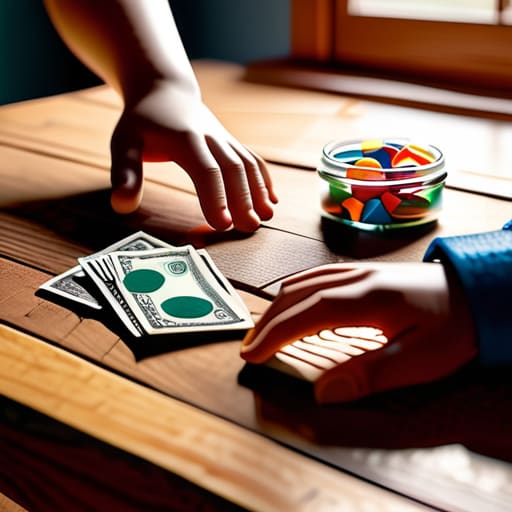
Instead of treating money like some mysterious concept that only adults deal with, I like to bring it into the light during our everyday errands. One of my favorite ways of using allowance to teach money management is to stop viewing it as just “free cash” and start treating it like a tiny, controlled laboratory. When my younger relatives come over, we don’t talk about complex stocks; we talk about the choice between a candy bar now or a bigger Lego set later. It’s about making the invisible visible.
I’ve found that the most effective age-appropriate money lessons happen at the grocery store checkout line. When they see me scanning items and watching the total climb, it’s a perfect moment to explain why we pick the store brand over the name brand. It isn’t about being stingy; it’s about seeing how small, intentional choices add up. By involving them in these minor decisions, you’re moving away from abstract lectures and toward teaching kids about saving and spending through actual, lived experience. It’s messy and sometimes a bit slow, but it’s much more effective than any textbook.
Age Appropriate Money Lessons That Actually Stick

When it comes to age-appropriate money lessons, the biggest mistake I see is trying to teach everything at once. You wouldn’t expect a toddler to master a spreadsheet, so don’t expect them to grasp inflation by age five. For the little ones, financial education for toddlers is really just about the concept of “more vs. less” and recognizing that coins have value. It’s tactile. Let them hold the heavy quarters and see the physical reality of a transaction at the grocery store.
As they hit elementary age, this is where the real work begins. I’m a huge advocate for using allowance to teach money management through a simple three-jar system: Spend, Save, and Give. It turns an abstract concept into something they can actually see growing. By the time they’re hitting those pre-teen years, you can start introducing the “boring” but vital stuff, like teaching kids about compound interest by showing them how their savings can actually work for them over time. It’s not about math problems; it’s about showing them the long-term payoff of patience.
Five ways to stop the "money talk" from feeling like a lecture
- Let them see the boring stuff. You don’t need to show them your entire bank statement, but letting them see you compare prices at the grocery store or checking a receipt for errors shows them that money is something we manage, not just something that magically appears.
- Ditch the single piggy bank. I’m a big fan of the three-jar system: Spend, Save, and Give. It’s a physical way for them to see their money splitting up into different “jobs,” which helps them understand that not every dollar is meant for immediate gratification.
- Embrace the “wait and see” rule. When they’re begging for that new toy, don’t just say no; suggest a 48-hour waiting period. Most of the time, the impulse fades, and it teaches them the difference between a genuine want and a momentary whim.
- Make mistakes part of the curriculum. If they blow their entire monthly allowance on candy in one afternoon, don’t bail them out. It’s better they learn the sting of an empty wallet now with five dollars than later with a credit card bill.
- Connect spending to effort. If they want something extra, instead of just handing over cash, help them brainstorm ways to earn it—whether it’s extra chores or helping a neighbor. It bridges the gap between “I want this” and “this costs time and energy.”
The Long Game
At the end of the day, teaching kids about money isn’t about mastering complex stock market theories or memorizing accounting principles. It’s about the small, messy, and very real moments—like letting them feel the sting of a spent allowance or showing them how we prioritize the grocery budget over a flashy new gadget. We’ve covered everything from setting up age-appropriate goals to integrating actual spending habits into their daily lives. The goal isn’t to raise miniature hedge fund managers; it’s to ensure they understand that money is simply a tool to help them navigate the world with confidence and intention.
Don’t get discouraged if your first few attempts feel awkward or if your kids still ask for every single toy they see at the checkout line. Financial literacy is a marathon, not a sprint, and you’re going to have some “learning moments” along the way (and I mean that for both of you). Just keep showing up, keep being transparent where you can, and remember that consistency beats perfection every single time. You aren’t just teaching them how to count coins; you’re giving them the foundation to build a life that feels stable and secure. You’ve got this.
Frequently Asked Questions
How do I handle it when my kid spends all their money on something totally useless right after I taught them about saving?
Honestly? Take a deep breath and let them. It feels like a failure, but it’s actually a controlled lesson. I’ve learned that a $20 mistake in childhood is much cheaper than a $2,000 mistake in their twenties. Instead of lecturing, just ask, “How does it feel now that it’s gone?” Let them sit with that “buyer’s remorse” for a minute. That sting is a much better teacher than anything I could say.
Should I be giving them a regular allowance, or is it better to pay them for specific chores around the house?
Honestly, I’m a big fan of the hybrid approach. If you pay for every single task, chores start to feel like a transaction rather than just being part of a household. I suggest giving a small, consistent allowance for “being a family member,” but then offering extra “commission” for bigger, non-routine jobs—like washing the car or cleaning out the garage. It teaches them that basic responsibilities are expected, but extra effort leads to extra rewards.
How do I talk about money without making it feel like a stressful or taboo topic in our home?
The trick is to stop treating money like a dark secret. If we only talk about it when the credit card bill arrives or when we’re stressing over a broken appliance, kids learn that money equals anxiety. Instead, try narrating your normal choices. “We’re choosing this brand because it fits our grocery budget this week.” It’s not a lecture; it’s just life. Normalize the conversation so it becomes as mundane as discussing what’s for dinner.